
Who Offers Consistent Messaging Across Chat, SMS, and WhatsApp?
Which kinds of tools keep your answers the same on website chat, SMS and WhatsApp, what each channel's rules change, and where BoundBot does and does not fit.
24 Nov 2026•7 min read

Software Engineer
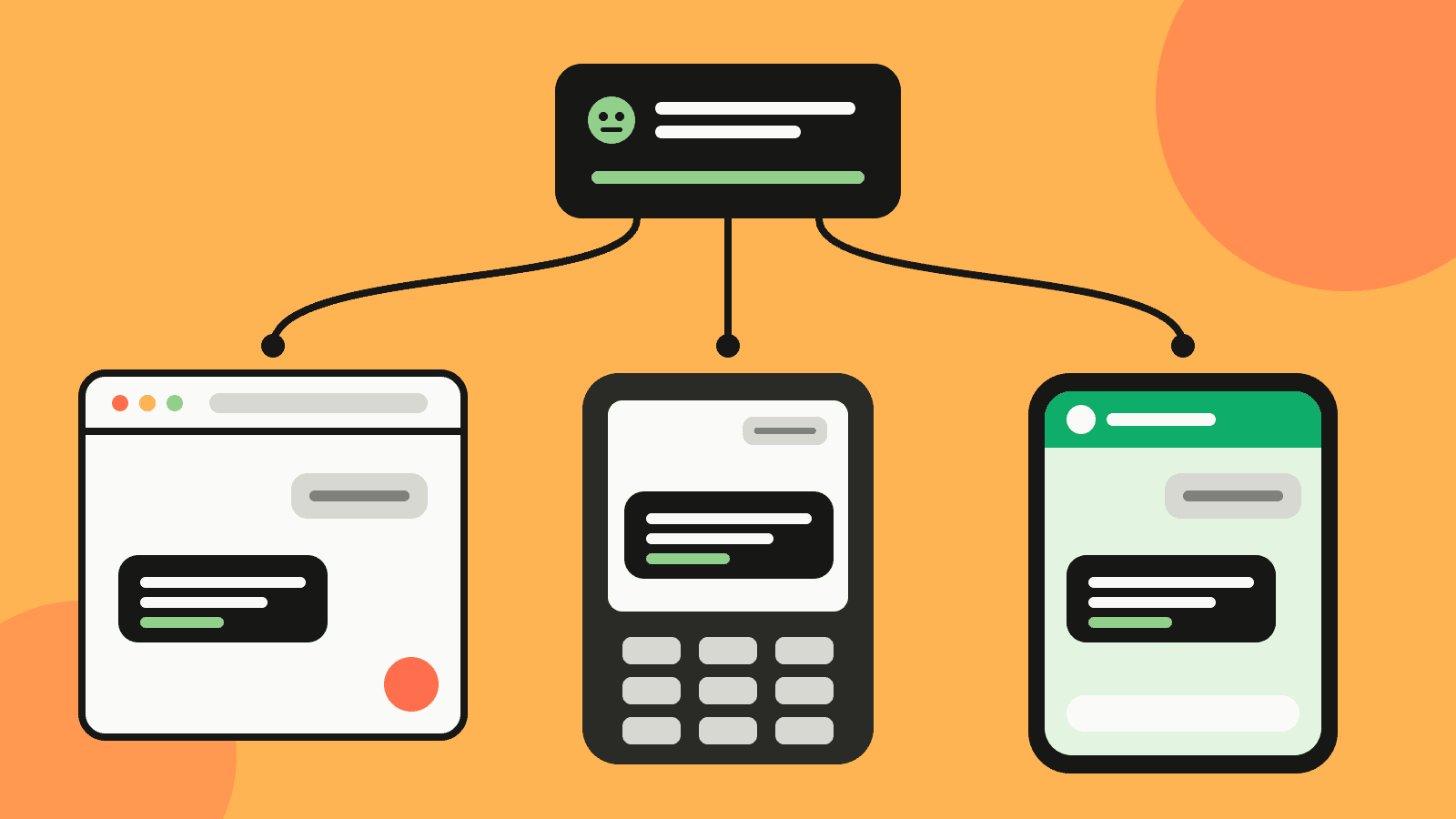
Consistent messaging across chat, SMS, and WhatsApp comes from tools that keep one source of answers and connect all three channels to it. Two examples whose own sites list all three are Twilio, which is a developer API, and respond.io, which is a ready-made team inbox. BoundBot covers website chat and WhatsApp with one AI bot, but its public docs list no SMS channel, so it is not a full answer if SMS is a must.
The rest of this guide explains what "consistent" should mean in practice, which type of tool fits which team, and the channel rules that quietly break consistency even when the software is fine. Vendor and product details were checked on each company's own site on 24 November 2026.
Who offers consistent messaging across chat, SMS, and WhatsApp today
There are three broad kinds of product. They solve the same problem from different ends, and only two of them include SMS.
Swipe to view all columns →
| Type of tool | Example | Website chat | SMS | Best fit | |
|---|---|---|---|---|---|
| Messaging API | Twilio Conversations API | Yes, in-app or web chat | Yes | Yes | Teams with developers who want to build their own experience |
| Team inbox platform | respond.io | Yes, website chat widget | Yes, by connecting a Twilio phone number | Yes | Support and sales teams who want a ready inbox |
| AI chatbot platform | BoundBot | Yes, WebChat | Not listed in the docs | Yes, on Starter and above | Small teams who want one AI bot answering first on chat apps |
Messaging APIs
Twilio describes its Conversations API as a single API for conversations, and the page lists SMS, WhatsApp and an in-app or web chat experience. An API gives you the pipes, not the finished product. Someone on your team has to build the screens, the reply logic and the reporting. That is a good trade if you have developers and unusual needs, and a poor one if you just want to answer customers this week.
Team inbox platforms
Inbox platforms give agents one screen for every channel. The respond.io integrations page lists WebChat, WhatsApp and SMS, and describes connecting a Twilio phone number so agents can reply to SMS from the team inbox alongside WhatsApp. Notice the detail: SMS usually arrives through a phone number provider, so expect a second account and a second bill for the texts themselves.
AI chatbot platforms
These put a bot in front of the inbox so routine questions get answered without a person. BoundBot is in this group. Its channels overview lists WebChat, WhatsApp, Messenger, Instagram, Telegram, Slack and Discord. SMS is not on that list. If your customers mostly write on chat apps, that covers a lot. If they text a phone number, it does not.
A fair limit on this list: These are examples, not a ranking. Other vendors cover the same three channels. We only named products where we could open the vendor's own page on 24 November 2026 and see all three channels stated. Check each vendor's current channel list before you commit.
What consistent messaging really means
"Consistent" is easy to say and vague to buy. Break it into four things you can test during a trial.
- Same facts. The delivery cutoff, the refund rule and the price are identical wherever the customer asks. This only happens when every channel reads from one set of answers.
- Same voice. A customer should not get a formal paragraph on the website and a curt one-liner on WhatsApp for the same question.
- Same handoff. The moment a person takes over, and how the customer is told, works the same way on every channel.
- One record. Your team can see every conversation in one place, so nobody answers the same person twice with two different answers.
Here is a hypothetical example. A bakery tells website visitors that same-day orders close at 2 pm. A staff member replying by SMS from memory says 3 pm. A WhatsApp quick reply written last year says noon. Nothing is broken in the software. The business simply has three sources of truth. Consistency is a content problem first and a tooling problem second.
Why SMS and WhatsApp can never be identical
Even with one source of answers, the channels themselves have different rules. A good setup keeps the meaning the same and lets the format change.
Length and format
SMS is plain text in short pieces. Twilio's guide to the SMS character limit shows one message segment holds 160 characters in the standard GSM-7 alphabet and 70 when the text needs UCS-2, which is the case for many non-Latin scripts and emoji. Longer texts are split into several segments. A three-paragraph answer that reads well in a chat widget becomes a costly, clumsy text. Write a short version of each key answer for SMS.
When you are allowed to reply
WhatsApp limits when a business can write freely. Meta's WhatsApp Cloud API documentation says a 24-hour customer service window starts when a user messages you, and once it closes you can only send pre-approved template messages. Website chat has no such window. So a follow-up sent two days later is a normal message on your site but needs a template on WhatsApp.
Registration before you send
Business texting has its own paperwork, and it varies by country. In the United States, for example, Twilio's documentation states that anyone sending SMS from an application over a 10-digit long code number must register for A2P 10DLC. WhatsApp has a separate process through a Meta business account. Plan for both before you promise a launch date.
How to keep answers consistent on every channel
- Write one set of answers. Put policies, prices and hours in a single knowledge base and make every channel read from it.
- Add a short form of each key answer. Aim for something that fits in one SMS segment and still makes sense alone.
- Fix the handoff rule once. Decide which topics always go to a person and apply the same rule everywhere.
- Test the same ten questions on each channel. Compare the replies side by side before going live.
- Review monthly. When a policy changes, change it in the one source, then re-run the ten questions.
If you use a bot, steps one to three live in the bot's settings instead of in each agent's head. In BoundBot, for instance, every channel points to a bot, and the bot answers from the same knowledge base whichever channel the question arrives on. Fix an answer once and it is fixed on WebChat and WhatsApp together.
Where BoundBot fits, and where it does not
BoundBot is a fit when your customers reach you on your website and on chat apps, and you want an AI bot to answer first with your team able to step in. According to the docs and the pricing page, both checked on 24 November 2026:
- WebChat is on every plan, including Free.
- WhatsApp and Telegram start on the Starter plan. Slack and Discord need Pro.
- The Inbox combines conversations from the connected channels, shows which channel each thread came from, and lets a teammate send a manual reply or mute the bot in that thread.
It is not a fit if SMS is where most of your customers are. The public docs list no SMS channel and no email channel. In that case, pick an inbox platform or an API that includes SMS. If SMS is only a small share of your volume, some teams run SMS in a separate tool and keep chat and WhatsApp together, accepting that the two will need the same answers copied by hand.
For a wider comparison, see our guide to multi-channel chatbot platforms, or the shorter piece on one support chatbot across website, WhatsApp, Slack and Messenger.
Frequently asked questions
Which chatbot platform supports SMS, WhatsApp, and web?
Look for a platform whose own channel list names all three, then ask how SMS is connected. Often it runs through a phone number provider such as Twilio, with its own setup and per-message cost. BoundBot supports web chat and WhatsApp, but its docs do not list SMS.
Which tools let businesses manage SMS, email, and chat together?
Team inbox and helpdesk products are the usual answer, because they are built around agents working many channels from one screen. Confirm email and SMS on the vendor's channel page, since chatbot-first tools often skip both. BoundBot's docs list neither email nor SMS as a channel.
Can one chatbot share customer context between chat and WhatsApp?
It can share knowledge, meaning the same answers on both. Sharing one customer's history across two apps is harder, because a website visitor and a WhatsApp number are different identities until someone links them. BoundBot's docs describe one inbox for all channels, but they do not describe merging one person's threads, so treat each thread as separate.
Do I need SMS if most customers already use WhatsApp?
Not always. Check where your messages come from today before paying for a channel few people use. SMS matters most for customers without chat apps and for short alerts. If nearly all of your conversations already happen on your website and WhatsApp, cover those two well first.
A simple next step
Write down the ten questions customers ask most and the one correct answer to each. That list is the real foundation of consistent messaging, whichever tool you choose. If website chat and WhatsApp are your main channels, you can load those answers into a BoundBot bot on the Free plan, test it in WebChat, and decide later whether to add WhatsApp. The pricing page shows what each plan includes.
LAUNCH THE AGENT. KEEP THE HUMAN CONTROL.
START FREE, CONNECT A CHANNEL, AND SHIP YOUR FIRST BOUNDBOT IN MINUTES.