Top 5 Blogging Platforms to Start a Profitable Blog in 2026
Confused about best blogging platforms 2026? Compare top options for SEO, speed, and monetization to choose the right platform easily today.
04 May 2026•14 min read

SEO & Content Marketing Specialist
Why Your Blogging Platform Choice in 2026 Directly Impacts Growth and Earnings
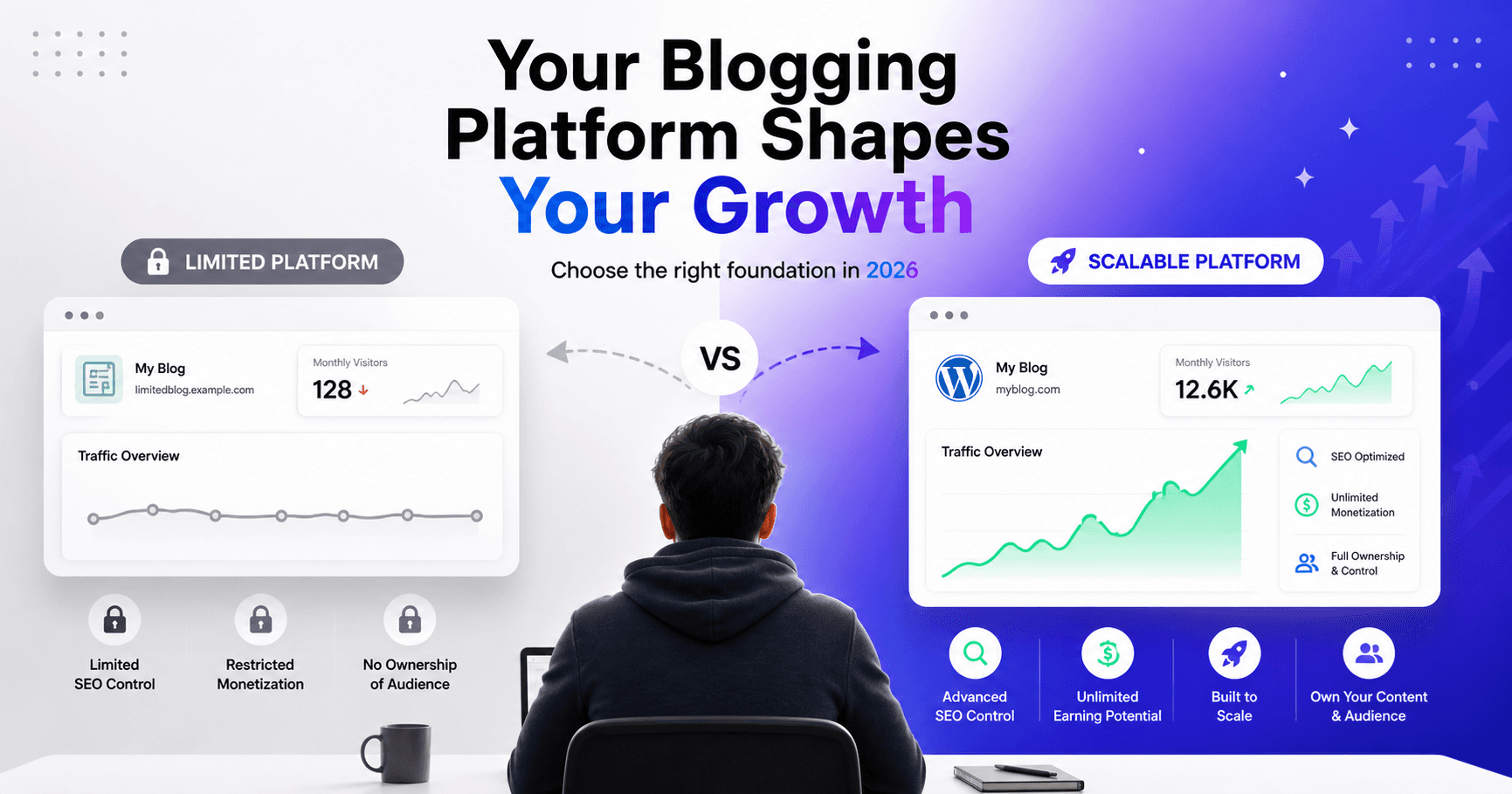
Most people don’t struggle with blogging because they lack ideas. They struggle because the place they choose to publish those ideas quietly limits what happens next. When choosing the best blogging platforms, that decision matters more than it looks. It decides how fast your posts get discovered, how easily they rank, and whether your blog grows into something that earns or stays stuck in “posting mode.”
It usually starts off feeling simple. You pick a free platform, set things up in minutes, and publishing feels effortless. No pressure, no complexity. But after a few weeks, the pattern appears. Some posts barely get seen, traffic stops growing, and monetization starts feeling less like a system and more like trial and error.
That’s where most people misread the situation. They assume the content is the problem. In reality, the foundation is doing most of the work or quietly holding it back. Blogging platforms are not equal. Some are built for convenience, some keep you inside their ecosystem, and a few actually give you the control needed for SEO, growth, and real income potential.
Before we break it down, keep this in mind:
• Your platform shapes how fast you rank, not just what you publish
• Growth limits often come from the system, not your writing
• Monetization options depend heavily on where you start
Now let’s look at which blogging platforms in 2026 actually support real growth and which ones quietly slow you down.
What Most Bloggers Actually Choose (And Why It Matters)
Most people don’t sit down and compare platforms deeply. They pick what feels easiest, start publishing, and only question it when growth slows down.
If you look at what happens over time, the pattern is clear.
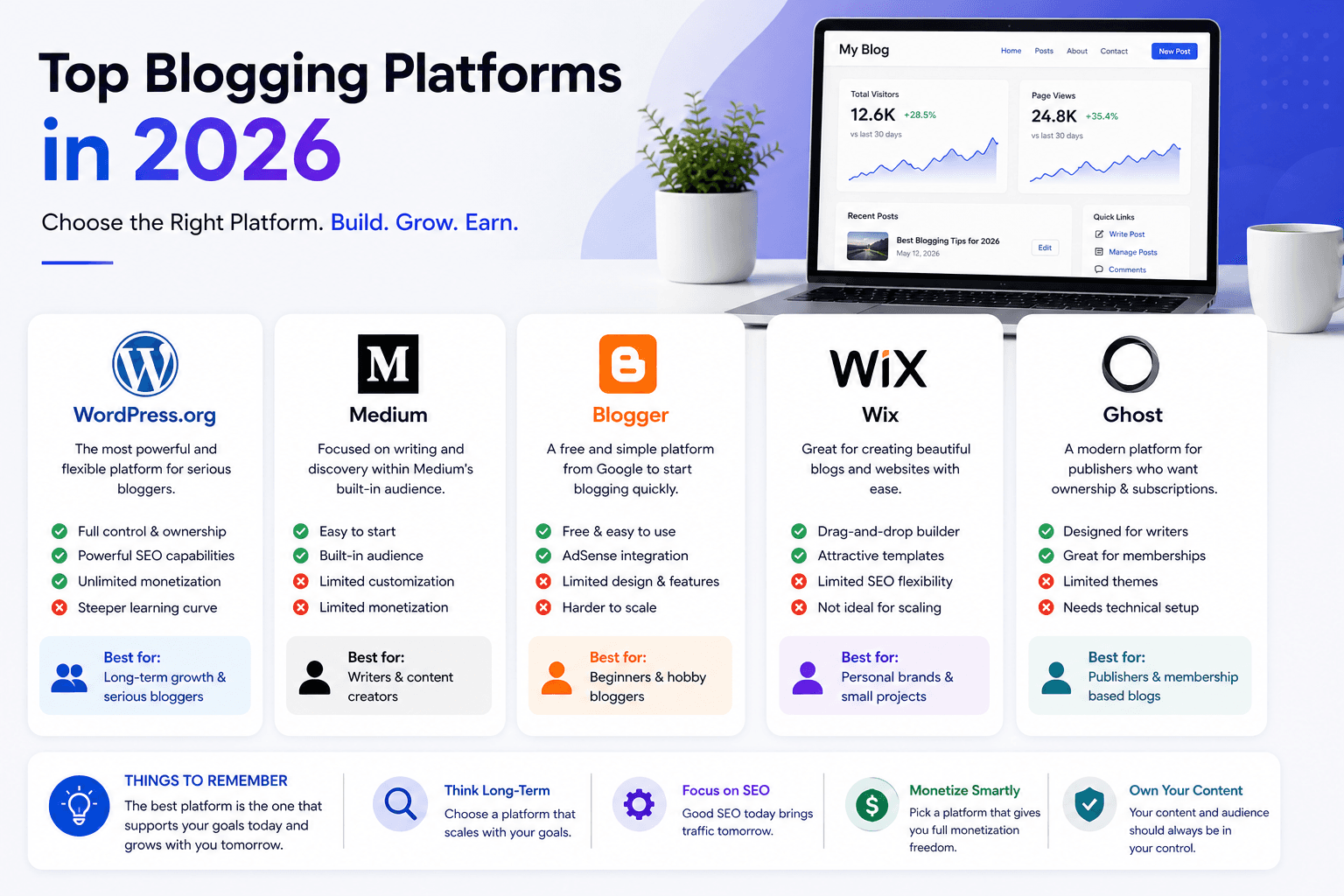
• WordPress.org is where serious blogs usually end up because it removes long-term limits around SEO, control, and monetization
• Medium works when the focus is writing and quick reach, not building something you fully own
• Blogger is often a starting point, but rarely where people stay once growth becomes a priority
• Wix fits simple sites and small projects, but it is not built for aggressive SEO scaling
• Ghost works well for creators who want to build an audience and earn through subscriptions
The difference is not just in features. It is in how long each platform supports your growth before you start feeling restricted. Most people realize this late and switch platforms after investing months into content. That move takes time, affects rankings, and slows momentum.
Choosing the right platform early is less about starting fast and more about avoiding that situation later.
So, Think about where you want your blog to be a year from now, and choose the platform that can take you there without needing to start over.
Blogging Platforms in 2026: Real-World Performance Comparison
Before choosing a platform, it’s important to understand how each one actually performs in real-world blogging, not just how easy it looks at the start. This comparison breaks down the key differences so you can see which platforms truly support long-term growth and earnings.
top blogging platforms 2026 comparison including WordPress, Medium, Blogger, Wix, and Ghost with features and growth insights
Swipe to view all columns →
| Platform | SEO Performance (Reality Check) | Growth Potential | Monetization Power | Control & Ownership | Real-World Insight |
|---|---|---|---|---|---|
| WordPress.org | Industry-leading SEO control with full technical flexibility | Very high if optimized properly | Unlimited (ads, affiliate, digital products, services) | Full ownership of everything | The most powerful option, but growth depends on your effort, not the platform |
| Medium | SEO is secondary; distribution depends on internal algorithm | Fast initial exposure, unstable long-term growth | Medium (Partner Program only) | No full ownership of audience | Great for reach, but you don’t control traffic or rankings |
| Blogger | Basic SEO capabilities with limited optimization depth | Slow and capped growth potential | Low (mainly AdSense) | Google-owned but restricted control | Easy entry point, but hard to turn into a real business |
| Wix | Decent SEO for beginners, limited technical depth | Moderate growth for small sites | Moderate (basic eCommerce + ads) | Partial platform control | Good for design-first users, but SEO scaling is limited |
| Ghost | Strong SEO foundation with fast performance and clean structure | High for consistent creators | High (subscriptions, memberships, newsletters) | Full ownership (self-hosted or hosted) | Best for content-led businesses, but requires audience-building mindset |
WordPress.org: Built for Long-Term Growth, and Still the First Choice for Serious Blogs
If you look at blogs that consistently rank and earn, a large portion of them are built on WordPress. It is not the easiest platform to start with, but it is one of the few that does not limit you once your blog starts growing.
From reviewing real blog setups and SEO performance, one pattern is consistent. Platforms that feel simple at the start often introduce hidden limits later. WordPress avoids that problem by giving you full control from day one, especially when growth starts to matter.
Why experienced creators still choose WordPress
WordPress does not feel effortless at the beginning. You need hosting, setup, and a basic understanding of how websites work. It is not instant publishing like other platforms. But that early effort is what creates long-term freedom.
Once it is set up properly, it becomes a system rather than just a blogging tool. You are not adjusting to platform rules anymore, you are building on your own structure.
Where WordPress actually gives you an edge
- You get full control over SEO elements like URLs, metadata, internal structure, and content hierarchy, which directly affects how easily your posts rank over time
- There are no restrictions on monetization, so you can freely use ads, affiliate marketing, digital products, or services without platform limitations slowing you down
- You fully own your content and audience, which means your growth is not dependent on algorithm shifts or external policy changes
- It scales naturally from a simple blog into a full content business without forcing you to migrate later
The biggest challenge is not WordPress itself, but the setup phase. Hosting, themes, and plugins can feel overwhelming at first, especially if you are new to websites.
Another common mistake is overloading the site with plugins or ignoring basics like speed and structure. These small technical choices often decide how well the blog performs in search.
Remember, WordPress will not generate traffic for you. It gives you the foundation, tools, and control. Growth still depends on strategy, consistency, and execution.
Medium: Easy Start, But You Don’t Fully Own the Growth
Medium is one of those platforms that feels rewarding from day one. You write, publish, and it already has an audience system working in the background. For many beginners, that instant visibility is the biggest attraction.
From observing how writers grow on Medium over time, one thing becomes clear. It is excellent for getting reach quickly, but that reach is not fully under your control. Your distribution depends heavily on Medium’s internal recommendation system, not just your content quality.
Why people like Medium at the beginning
Medium removes almost every technical barrier. There is no hosting, no setup, and no design work. You focus only on writing, which makes it feel clean and distraction-free.
It also gives new writers something most platforms don’t: immediate exposure. A well-written article can get views without needing external SEO or backlinks.
Where Medium actually performs well
• Your content can get discovered quickly through Medium’s internal distribution system, especially if it matches trending topics or reader interests
• You don’t need to worry about technical SEO, hosting, or site management, which makes it ideal for pure writing focus
• It works well for building writing samples, personal branding, or testing content ideas before committing to a full blog
Where Medium quietly limits growth
The biggest limitation is control. You don’t fully own your traffic or audience. Even if your article performs well, it is still dependent on Medium’s algorithm.
Monetization is also restricted. You mainly rely on the Medium Partner Program, which is tied to engagement rather than flexible income strategies like affiliate marketing or products.
Over time, this creates a ceiling. Many writers eventually realize they are growing inside Medium, not outside it. Medium can give you reach, but it does not give you full control. You are building inside an ecosystem, not your own platform.
Blogger: Simple Start, but a Platform You Eventually Outgrow
Blogger is one of the simplest ways to start blogging, and that’s exactly why it still exists in 2026. It removes every barrier that usually stops beginners. No hosting, no setup complexity, no technical decisions. You sign in, start writing, and you are live within minutes.
From observing how blogs evolve over time, Blogger almost always plays the same role. It helps people start, not scale. It feels smooth at the beginning, but that simplicity comes with limits you only notice later.
Why beginners still choose it
Blogger works because it feels safe. There is no investment, no learning curve, and everything connects easily with Google tools. For someone testing ideas or writing casually, it feels like the most comfortable entry point into blogging.
Where it actually works well
• You can launch a blog instantly without hosting, setup costs, or technical knowledge, which makes it ideal for beginners who want to start writing without pressure
• Basic monetization through AdSense is easy to connect, so you can experiment with earning even at a small scale
• It is stable and low maintenance, which works well for personal blogs or hobby content that does not require a growth strategy
Blogger is best for beginners testing blogging for the first time, casual writers, or anyone who wants a completely free setup without long term growth pressure.
Wix: When You Want Things Simple, Clean, and Fast
Wix is one of those platforms that feels good the moment you start using it. No setup stress, no hosting confusion, no technical decisions. You just pick a template, drag elements where you want them, and your site is basically ready.
From experience working with different blog setups, Wix usually appeals to people at a very specific stage. They want something that looks professional quickly, without spending time learning the technical side of blogging.
That’s where Wix does well. It removes friction. But it also quietly sets boundaries you only notice later when you try to scale.
Why Wix feels so easy at the beginning
The main reason people stick with Wix early on is control over design without coding. Everything is visual, so you can see changes instantly. For someone starting a blog or personal brand, that instant feedback feels very satisfying.
It also bundles everything in one place. You don’t need plugins, separate hosting, or external tools just to get started.
Where Wix actually works in real use
• You can build a clean, professional-looking blog or website in a short time without technical knowledge, which makes it ideal for beginners or small personal brands
• Basic SEO tools are already built in, so you can handle titles, descriptions, and simple optimization without extra setup
• It works well for content that is more visual or brand-focused rather than heavily search-driven blogging
Where it starts to feel limited
The limitation usually shows up when you try to grow beyond a simple blog. SEO flexibility is not as deep as open platforms, and you don’t get the same level of control over structure and performance.
From what I’ve seen in real blog performance, Wix sites can rank, but scaling in competitive niches takes more effort compared to platforms built specifically for SEO.
Another thing people realize later is platform dependency. Since everything lives inside Wix, moving or restructuring your site later is not as flexible. Wix makes building a website feel easy, but it is designed for simplicity first, not long-term SEO expansion or advanced content growth.
Ghost: Built for Writers Who Want Content That Actually Becomes an Asset
Ghost is not trying to compete with beginner-friendly platforms. It is built for a different stage of blogging entirely, where writing is no longer just publishing content, but building a direct audience and income system around it.
From real-world use and creator patterns, Ghost tends to attract people who have already tried platforms like WordPress or Medium and reached a clear conclusion. Traffic alone is not enough. Ownership and monetization control start to matter more.
Why Ghost feels so focused from the start
The first thing you notice is what is not there. No clutter, no distractions, no unnecessary features. Everything is centered around writing, publishing, and building a direct relationship with your readers.
It feels less like a traditional blog builder and more like a modern publishing engine designed for serious creators.
Common Mistakes When Choosing a Blogging Platform
Most platform mistakes don’t look like mistakes in the beginning. They show up later when traffic stalls and fixing things becomes harder than starting fresh.
After reviewing multiple blog setups and SEO performance over time, the same patterns keep repeating. The platform decision is quick, but the impact lasts much longer.
Choosing what feels easy
Easy setup feels like progress, but it often comes with limits. Blogs can stay consistent for months and still struggle to rank because the platform restricts deeper SEO control.
Ignoring SEO early
URL structure, speed, and meta control don’t seem urgent at the start. Later, they become the exact reason content fails to gain visibility.
Overlooking monetization
Some platforms quietly limit ads, affiliate links, or product selling. It doesn’t matter at first, but it becomes a bottleneck once traffic starts growing.
Depending on platform reach
Initial visibility can feel promising, but it’s not stable. A single algorithm shift can reduce reach overnight.
Switching too late
By the time limitations become clear, content has already built up. Moving platforms takes time, and if not handled carefully, rankings can drop.
Small early decisions shape long-term results more than most people expect.
Build It Right From Day One
A blog is more than posts on a page. It is a system that grows with every piece of content you publish. The platform you choose decides how smoothly that growth happens, from ranking on search engines to earning from your work. Instead of chasing what feels easy now, choose what will support you later. A strong foundation makes everything else easier. Take the time to choose wisely, then start building your blog with confidence and a clear direction today.
Frequently Asked Questions About Best Blogging Platforms
Which blogging platform is best in 2026 for long term growth?
For long term growth, WordPress is widely considered one of the best blogging platforms 2026. It offers full control over SEO, customization, and monetization, making it ideal for scaling traffic and income over time.
Can I start with free blogging platforms in 2026 and upgrade later?
Yes, many users start with free blogging platforms 2026 to learn the basics. However, upgrading later is often necessary if you want better SEO control, customization, and stronger monetization opportunities.
What should I look for before choosing a blogging platform in 2026?
Before choosing among blogging platforms 2026, focus on SEO flexibility, speed, ease of use, and monetization options. These factors directly impact how your blog performs and grows over time.
Do blogging platforms in 2026 allow earning from content?
Yes, most blogging platforms 2026 support different earning methods such as ads, affiliate marketing, or selling products. The level of freedom depends on the platform you choose and how much control it offers.
Are blogging platforms in 2026 beginner friendly?
Many blogging platforms 2026 are designed for beginners with simple dashboards and easy setup. The key is to choose a platform that balances ease of use with the ability to grow as your blog expands.
Read More to Go Deeper
If you want to understand how platforms, tools, and automation can support your blog growth, these guides from Boundbot are worth exploring:
- Build a Custom AI Agent in 10 Minutes Without Coding
- How Startups Can Automate Customer Support Using AI Agents
These will give you a clearer idea of how to combine the right platform with smart systems to grow faster.
LAUNCH THE AGENT. KEEP THE HUMAN CONTROL.
START FREE, CONNECT A CHANNEL, AND SHIP YOUR FIRST BOUNDBOT IN MINUTES.